

Powder-coated and diamond-cut alloys need a gentler approach than many drivers realise. The finish may look tough, but harsh chemicals, stiff brushes, and careless technique can dull the coating, stain the surface, or compromise the clear lacquer. With the right products and method, cleaning alloy wheels becomes safer, easier, and better for long-term powder coat protection.
What makes these wheels easy to damage?
Powder-coated wheels have a baked-on coloured finish, while diamond-cut wheels have a machined face protected by lacquer. Both can be vulnerable if brake dust, road salt, and grime are left sitting for too long. The issue is not just dirt; it is the combination of heat, contamination, and aggressive cleaning that can weaken the surface over time.
Diamond-cut wheels need particular care because the lacquer is the main barrier between the exposed metal and the outside world. Once that lacquer is chipped, cracked, or chemically damaged, moisture can creep underneath and cause cloudy patches or corrosion. That is why good alloy wheel cleaning is about prevention, not just shine.
Safe wheel cleaning tips that protect the finish
Start with cool wheels, ideally out of direct sunlight. Cleaning hot wheels can cause products to dry too quickly, leaving stains or uneven marks. Rinse thoroughly first to remove loose grit before touching the surface, because dragging dirt across the lacquer can create fine scratches.
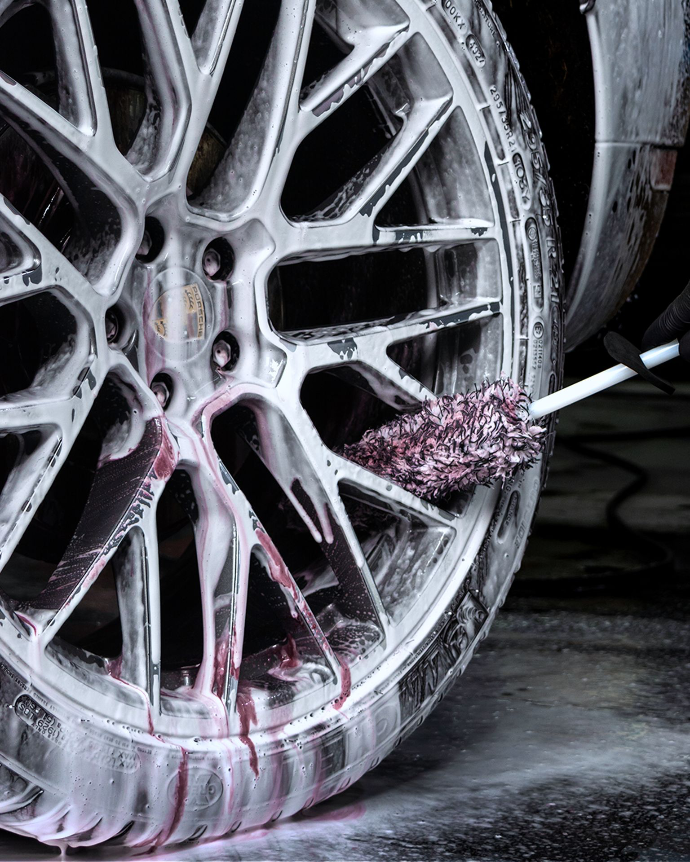
Use a pH-neutral or wheel-safe cleaner designed for delicate finishes. Spray evenly, allow a short dwell time as directed, then agitate gently with soft brushes or microfibre tools. Avoid scouring pads, metal brushes, and anything that feels rough against your hand.
A simple safe routine looks like this:
- Rinse first to flush away loose grit and brake dust.
- Apply a gentle wheel cleaner suitable for lacquered, painted, or powder-coated finishes.
- Use soft tools for barrels, spokes, bolt holes, and tight edges.
- Rinse completely so no chemical residue remains.
- Dry with a clean microfibre to reduce water spots.
- Add protection with a suitable wheel sealant or coating if desired.
Will acid ruin my powder coated wheel when cleaning?
Acid can damage powder-coated and lacquered wheels if it is too strong, used too often, left on too long, or applied to a compromised finish. The safest answer is to avoid acidic cleaners unless the product specifically states it is safe for your wheel type and you follow the instructions exactly.
Many acid-based products are designed for heavy contamination, not routine maintenance. If the coating already has chips, curb damage, bubbling, or exposed metal, acid can make problems worse. For regular cleaning, a milder pH-neutral cleaner is usually the better choice for clean powder-coated wheels and diamond-cut faces.
How to avoid ruining lacquer over time
The best protection is consistent, gentle cleaning. Brake dust becomes harder to remove the longer it sits, which tempts people to use stronger chemicals later. Washing wheels regularly helps you avoid that cycle and keeps cleaning less abrasive.
Also pay attention to damage. If you spot white staining, lifting lacquer, rough edges, or corrosion around a chip, cleaning alone will not fix the problem. Be gentle in those areas and consider professional advice before using stronger products.
Key takeaway
Safe alloy wheel cleaning comes down to cool wheels, gentle products, soft tools, and thorough rinsing. If you are unsure whether a cleaner is suitable, choose the milder option and test carefully. That small extra caution can help preserve gloss, protect lacquer, and keep powder-coated and diamond-cut wheels looking cleaner for longer.